We've picked 35 of the best Star Wars games on PC and consoles, from modern adventures such as Jedi: Survivor and Outlaws to classics like KOTOR and Battlefront. The list also includes 2026 releases Zero Company and Galactic Racer. Across more than four decades, the series has produced RPGs, shooters, space sims, strategy games, and racers — with plenty still worth playing today. We've grouped our picks by genre, highlighted their strengths, and included Steam review scores where available. Whether you want to wield a lightsaber, pilot an X-wing, or command a fleet, there's a game here for you.
The 10 essential Star Wars games at a glance
For a quick starting point, these ten games cover some of the best experiences the series has to offer. Some focus on story and choices, others on multiplayer battles, lightsaber duels, or cooperative adventures.
- Star Wars: Knights of the Old Republic 2 — The Sith Lords — a darker RPG that questions the nature of the Force;
- Star Wars: Knights of the Old Republic — a defining Star Wars RPG with memorable companions and a gripping story;
- Star Wars: Empire at War — galactic strategy with ground battles and fleet combat;
- Star Wars: Republic Commando — a tactical shooter built around commanding a squad of clone commandos;
- Star Wars: Battlefront 2 — Classic — the 2005 favorite with space battles, playable heroes, and Galactic Conquest;
- Star Wars: Battlefront (2004) — the original large-scale battlefield experience;
- Star Wars Jedi Knight: Jedi Academy — a favorite for lightsaber combat and multiplayer duels;
- LEGO Star Wars: The Complete Saga — six films retold as a cooperative LEGO adventure;
- Star Wars: Battlefront 2 (2017) — a troubled launch followed by years of substantial improvements;
- Star Wars Jedi: Fallen Order — a story-driven Jedi adventure with challenging combat and exploration.
New releases in 2026
Star Wars gained a turn-based tactics game and a new racing game in 2026. Zero Company puts you in command of a small squad on covert operations, while Galactic Racer follows a pilot's career in an underground racing league. Both are available on PC, PlayStation 5, and Xbox Series X/S.
Star Wars Zero Company (2026)
Developed by Bit Reactor with Respawn's involvement, this turn-based tactics game launched on August 27. In the closing days of the Clone Wars, former Republic officer Hawks leads a squad of mercenaries tasked with investigating a new threat. You control four characters in battle, using cover, managing action points, and combining their abilities. Between missions, you return to base to recruit soldiers, upgrade equipment, and talk to your team. Relationships affect how effectively squadmates fight together, and soldiers can die permanently. The XCOM influence is clear, but cinematic storytelling and an emphasis on companions give Zero Company its own identity. For a closer look at its strengths and shortcomings, see our Star Wars Zero Company review.
Star Wars: Galactic Racer (2026)
Star Wars: Galactic Racer is an arcade racing game from Fuse Games, a studio founded by Criterion veterans who worked on Burnout and Need for Speed. Released on October 6, it takes place after the Empire's fall, when underground racing has become big business. You play as Shade, a racer trying to rise through the Galactic League and settle a score with a rival. Races encourage ramming opponents, taking risks with boost, and finding shortcuts, with vehicles ranging from speeders and speeder bikes to podracers. The campaign incorporates roguelite elements: you choose a route through successive events and upgrade your vehicle between races, but failure can cost you your entry and force you to restart the tour. Some resources carry over between attempts. Alongside the story campaign, there are standalone arcade challenges and online races.
Action-adventure: play as a Jedi and beyond
Third-person action-adventures are an accessible starting point if you're coming to Star Wars games from the films and shows. This section includes Cal Kestis' journey in Fallen Order and Survivor, Kay Vess' adventures in the criminal underworld, and the story of Darth Vader's secret apprentice in The Force Unleashed. Some emphasize exploration and precise lightsaber combat; others let you unleash spectacular Force powers.
Star Wars Jedi: Survivor (2023)
Star Wars Jedi: Survivor continues Cal Kestis' story five years after Fallen Order. He's now an experienced Jedi struggling against the Empire, while a discovery offers the possibility of a refuge beyond its reach. Respawn expands the original's formula with five lightsaber stances, larger areas to explore, rideable creatures, and a settlement on Koboh that develops as you meet new characters. Technical problems overshadowed the launch, and the Steam reception remains mixed. Still, the broader combat options and exploration give fans of Fallen Order plenty to enjoy. For more games with similarly demanding combat, see our best Souls-like games list.
Star Wars Jedi: Fallen Order (2019)
Star Wars Jedi: Fallen Order brought the focus back to a substantial single-player adventure. Cal Kestis, a Padawan who survived Order 66, hides from the Empire while working in a ship-breaking yard. When his identity is exposed, he must take up his lightsaber again and confront the legacy of the Jedi Order. Respawn combines deliberate combat with Metroidvania-style exploration: blocking and parrying matter, while new abilities open previously inaccessible paths on familiar planets. The droid BD-1 accompanies Cal throughout the journey, and other allies gradually join him. Despite technical issues at launch, Fallen Order earned a strong following. It also features in our selection of the best action-adventure games.
Star Wars Outlaws (2024)
Star Wars Outlaws takes the open-world approach to the galaxy's criminal underworld. Set between The Empire Strikes Back and Return of the Jedi, it follows scoundrel Kay Vess and her companion Nix as they prepare for a major heist. You take jobs for rival syndicates, manage your reputation, travel by speeder, and fight in space aboard the Trailblazer. Its appeal lies in experiencing familiar Star Wars settings through someone who relies on deception, improvisation, and a blaster rather than the Force. Stealth and enemy AI drew criticism at launch, but the planets and underworld setting offer a different kind of adventure from the Jedi games.
Star Wars: The Force Unleashed (2008)
Star Wars: The Force Unleashed puts spectacular Force powers at the center of combat. You play as Starkiller, Darth Vader's secret apprentice, who hunts surviving Jedi before becoming involved in the formation of the Rebel Alliance. The Euphoria and Digital Molecular Matter systems help sell the destruction: enemies react as you lift and throw them, while parts of the environment break under your attacks. The appeal is less about careful lightsaber duels and more about overwhelming opponents with a combination of saber strikes and Force abilities. The presentation shows its age, but the combat still delivers plenty of spectacle.
Star Wars: The Force Unleashed 2 (2010)
Star Wars: The Force Unleashed 2 gives Starkiller two lightsabers and even more destructive abilities, including the Force Fury mode. Vader claims that this version of his apprentice is a clone, setting up a story about identity and the memories Starkiller carries. The action is more visually elaborate, but the campaign is short, the level design is more restrictive, and the ending leaves the story unresolved. It offers more of the first game's explosive combat, but it's best approached after the original rather than as a standalone introduction.
Star Wars: Shadows of the Empire (1996)
Star Wars: Shadows of the Empire combines several types of action in one campaign. You play as mercenary Dash Rendar, helping the Rebel Alliance and protecting Luke Skywalker from the schemes of crime lord Xizor. The story takes place between The Empire Strikes Back and Return of the Jedi, beginning with the Battle of Hoth. You attack Imperial walkers in a snowspeeder, fight on foot, take part in a swoop-bike chase, and pilot your own spacecraft. The game debuted on Nintendo 64 in 1996 and reached PC a year later. Its camera and controls require patience today, but the variety of missions and separate storyline make it an interesting part of the Star Wars game catalog.
RPGs: the crown jewels of the galaxy
The RPGs from BioWare and Obsidian remain among the most celebrated Star Wars games. They emphasize companions, dialogue, and choices between the light and dark sides, with stories set thousands of years before the films. You don't need detailed knowledge of the screen universe to follow them. The two Knights of the Old Republic games offer standalone campaigns, while The Old Republic expands the setting into an MMO with eight class stories.
Star Wars: Knights of the Old Republic 2 — The Sith Lords (2004)
Star Wars: Knights of the Old Republic 2 (KOTOR 2) takes a darker, more questioning approach than its predecessor. You play as a Jedi Exile who has lost their connection to the Force and returns to a galaxy where the Jedi Order has been devastated. Your companions have their own motives, and the mysterious Kreia challenges familiar assumptions about the Force, morality, and the consequences of your actions. Obsidian's tight development schedule left parts of the story unfinished. The fan-made Sith Lords Restored Content Mod restores some cut material and helps fill gaps, making it a valuable addition to a first playthrough.
Star Wars: Knights of the Old Republic (2003)

Star Wars: Knights of the Old Republic (KOTOR) remains one of the defining RPGs of its era. Set roughly 4,000 years before the films, it follows your character through a war between the Republic and the Sith, gradually revealing a story best experienced without spoilers. BioWare combines party-based combat using a d20 rules system with extensive dialogue and companions such as Mandalorian mercenary Canderous Ordo and Jedi Bastila Shan. Your decisions affect relationships, your alignment, and the direction of the story. Combat can be paused to issue commands, so planning matters more than quick reactions. A remake is still in development, but it has no confirmed release date.
Star Wars: The Old Republic (2011)
Star Wars: The Old Republic (SWTOR) brings BioWare's approach to storytelling into an MMORPG set around 300 years after KOTOR. Its eight fully voiced class stories give Jedi, smugglers, bounty hunters, Imperial agents, and other characters their own journeys and companions. Much of that story content can be played solo, with dialogue choices allowing you to follow the light or dark side regardless of your faction. Beyond the individual campaigns, there are expansions, group activities, and the usual MMO progression systems. The free-to-play model lets you try the game without buying a subscription, though free accounts have restrictions.
Shooters and multiplayer: blasters and lightsabers
Star Wars shooters range from large-scale battlefield games to squad-based campaigns and adventures that combine blasters with lightsaber combat. This section covers both generations of Battlefront, the clone commandos of Republic Commando, Kyle Katarn's adventures, and Jedi Academy. Some put you in the middle of a war; others focus on a single character and a carefully designed campaign.
Star Wars: Battlefront 2 (2017)
Star Wars: Battlefront 2 recovered from one of the series' most controversial launches. Its loot boxes and progression system drew widespread criticism in 2017, but EA and DICE reworked progression and expanded the game through years of free updates. The result is a substantial multiplayer shooter spanning all three film eras, with infantry, vehicles, and playable heroes. Galactic Assault supports battles with up to 40 players, while other modes offer smaller encounters and cooperative missions. The single-player campaign follows Imperial officer Iden Versio after Return of the Jedi. Its detailed environments and sound design remain strong reasons to visit familiar locations from the films.
Star Wars: Battlefront 2 — Classic (2005)
The original Star Wars: Battlefront 2 builds on its predecessor with playable heroes, a campaign following the 501st Legion, and space battles. You can dogfight around capital ships, land in an enemy hangar, and attack systems from inside — a different experience from the ground battles. Galactic Conquest adds a strategic layer, letting you move fleets and fight for control of planets. The original PS2 and Xbox versions also offered split-screen play, but that feature is absent from the original PC release sold separately from the newer Classic Collection. For players returning to the 2005 game, the distinction between those editions matters.
Star Wars: Battlefront (2004)
Pandemic Studios' first Star Wars: Battlefront established the series' approach to large battles: choose a soldier, capture command posts, and use vehicles to support your side. The Republic, Confederacy, Empire, and Rebel Alliance fight across locations such as Hoth and Geonosis. Historical Campaigns recreate battles from the films, while Galactic Conquest connects individual matches through a campaign for control of planets. The original console versions support split-screen, though the original PC version does not. It lacks some of its sequel's features, but its straightforward battles make it an accessible introduction to classic Battlefront.
Star Wars: Battlefront (2015)
DICE's Battlefront reboot concentrated on the look and sound of the original trilogy. Snow-covered Hoth, the forests of Endor, and the familiar sounds of blasters and spacecraft helped recreate the atmosphere of the films. The game launched without a full story campaign and faced criticism over its limited selection of maps and modes. Updates and expansions later added more locations and activities. Its main appeal remains multiplayer combat with recognizable vehicles and heroes such as Luke Skywalker, Darth Vader, and Han Solo, rather than a substantial single-player adventure.
Star Wars: Republic Commando (2005)
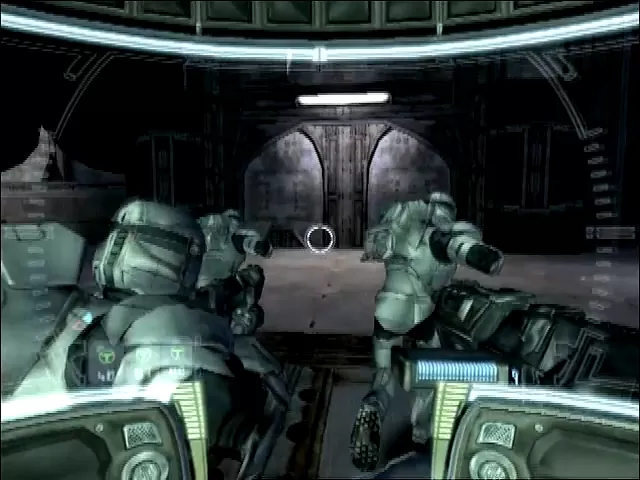
Star Wars: Republic Commando follows Delta Squad, a team of four clone commandos carrying out dangerous assignments during the Clone Wars. You lead them through Geonosis, an abandoned Republic ship, and the forests of Kashyyyk. Context-sensitive commands let you order teammates to take firing positions, breach doors, plant explosives, or revive fallen squad members without navigating complicated menus. The campaign emphasizes cooperation between soldiers rather than the powers of a Jedi, with squad dialogue giving each commando a distinct personality. Jesse Harlin's score, including the Mandalorian-language song “Vode An,” adds to that identity. It remains a single-player campaign: your squadmates are controlled by AI.
Star Wars Jedi Knight 2: Jedi Outcast (2002)

Star Wars Jedi Knight 2: Jedi Outcast brings Kyle Katarn back into conflict with the dark Jedi Desann. Kyle begins the campaign relying on blasters and other conventional weapons, then regains his connection to the Force and takes up his lightsaber. That transition changes how you approach combat: saber styles, movement, timing, and Force abilities become central to encounters. The campaign combines gunfights and duels with exploration and environmental puzzles. Its lightsaber system remains a favorite among longtime fans, and it provides the foundation for the combat in Jedi Academy.
Star Wars Jedi Knight: Jedi Academy (2003)
Star Wars Jedi Knight: Jedi Academy shifts the focus to Jaden Korr, a new student training under Kyle Katarn. You customize your character and lightsaber, then undertake missions across the galaxy while investigating a cult connected to the Sith. A single saber is your starting weapon; later, you can choose dual sabers or a double-bladed lightsaber, each with its own fighting style. The game expands Outcast's combat and gives you more freedom to choose missions and develop Force abilities. It is especially appealing if lightsaber duels matter more to you than a tightly directed cinematic story.
Star Wars: Dark Forces Remaster (2024)
Star Wars: Dark Forces Remaster updates the 1995 shooter that introduced Kyle Katarn. Working for the Rebel Alliance, Kyle investigates the Empire's Dark Trooper project through a campaign of infiltration, firefights, and sabotage. Nightdive preserves the original level layouts and exploration while adding updated visuals, modern controller support, and support for resolutions up to 4K and frame rates up to 120 fps. Expect winding levels, hidden passages, and objectives that require more than following a marker. This is a useful starting point for Kyle's story and a chance to experience an important shooter from the era before he took up a lightsaber.
Star Wars Jedi Knight: Dark Forces 2 (1997)
Star Wars Jedi Knight: Dark Forces 2 continues Kyle Katarn's story as he discovers his connection to the Force and begins using a lightsaber. Blaster combat remains important, but Force abilities gradually broaden your options, from healing and enhanced movement to destructive dark-side powers. Your actions and alignment affect how the story ends. Live-action cutscenes give the campaign a distinctive 1990s character, though the visuals and controls require some adjustment today. It is the key chapter between Dark Forces and Jedi Outcast for anyone following Kyle's development through the series.
Flight sims and arcade flying games
These games put you in the pilot's seat, escorting allies, attacking enemy ships, and taking part in familiar battles from the films. X-Wing, TIE Fighter, and Squadrons require you to manage ship systems and master maneuvers, while Rogue Squadron favors simpler controls and faster action. For more options beyond Star Wars, see our best space games for PC list.
Star Wars: Squadrons (2020)
Star Wars: Squadrons offers a modern take on cockpit-based space combat. The campaign alternates between Imperial and New Republic pilots, while multiplayer modes pit two teams of five against each other. Success requires more than accurate shooting: you need to manage power, understand your ship's strengths, and coordinate with other pilots. VR and flight-stick support make the cockpit feel more convincing, with instruments providing information directly in front of you and enemies passing around your field of view. The selection of missions and modes is relatively limited, but the flying itself is the main attraction.
Star Wars: X-Wing (1993)
Star Wars: X-Wing launched LucasArts' celebrated series of space-combat simulators. As an Alliance pilot, you escort transports, attack Imperial forces, and eventually take part in the assault on the Death Star. Flying involves distributing power between engines, shields, and lasers, issuing orders to wingmates, and responding to damage during a mission. The original game includes training exercises and three main tours of duty. Its interface and controls take time to learn, but it establishes many of the ideas developed in later entries. For anyone interested in the history of Star Wars flight sims, this is where to begin.
Star Wars: TIE Fighter (1994)
Star Wars: TIE Fighter builds on X-Wing but puts you on the other side of the conflict. As an Imperial pilot, you carry out orders, fight Rebel forces, and become involved in intrigues within the Empire. You fly several types of spacecraft, from the fragile, unshielded TIE Fighter to the TIE Bomber and TIE Interceptor. Each has different strengths and limitations, so tactics that suit one ship may leave you vulnerable in another. Many fans consider it the strongest entry in the series, both for its combat and for the way it presents Imperial service from the inside.
Star Wars: X-Wing Alliance (1999)
Star Wars: X-Wing Alliance is the final and most ambitious entry in the series. Ace Azzameen begins as a pilot for his family's trading business, but conflict with the Empire draws him into the Rebel Alliance. Family affairs intertwine with military assignments, culminating in an attack on the second Death Star aboard the Millennium Falcon. The campaign includes around 50 missions, alongside multiplayer for up to eight players. Transport ships broaden the flying experience beyond fighters, allowing you to switch between piloting and operating their gun turrets. Community mods can update the visuals, making Alliance a worthwhile choice for a substantial, story-driven space sim.
Star Wars: X-Wing vs TIE Fighter (1997)

Unlike the surrounding entries, Star Wars: X-Wing vs TIE Fighter was designed primarily for multiplayer. The original release offered individual missions and battles rather than a connected story campaign, with players flying for either the Alliance or the Empire. The Balance of Power expansion later added two campaigns and is included in the Steam edition. Its emphasis on coordinated flying makes it an early counterpart to Squadrons: success depends on understanding your fighter and working with other pilots. The available ships include the X-wing, A-wing, TIE Interceptor, and TIE Advanced. It is most appealing to players who already enjoy the series' flight mechanics and want to explore its team-based battles.
Star Wars Rogue Squadron 3D (1998)
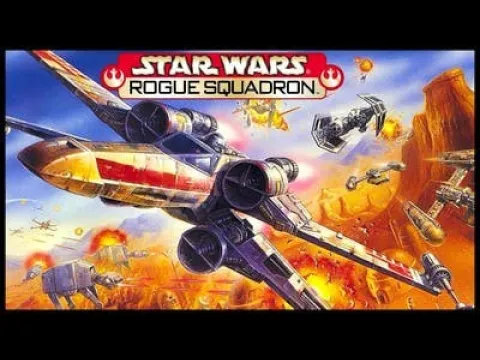
Star Wars Rogue Squadron 3D offers faster, more accessible flying than X-Wing and TIE Fighter. You play as Luke Skywalker, who leads an elite Rebel squadron alongside Wedge Antilles. Instead of detailed systems management, the focus is on dogfights, escort missions, bombing runs, and attacks on ground vehicles. The main campaign and bonus stages total 19 missions, including the Battle of Hoth, unlocked by earning gold medals. Flights take you through Tatooine's canyons and other planetary environments in fighters and snowspeeders. The graphics and controls show their age, but Rogue Squadron remains an appealing alternative for anyone who wants to get straight into the action.
Strategy games: command armies and fleets
Here, victory depends on the forces you build and how you use your resources. Empire at War lets you capture planets and command troops on the ground and fleets in space. Galactic Battlegrounds follows the classic Age of Empires formula: build a base, research technologies, and send infantry, vehicles, and aircraft into battle.
Star Wars: Empire at War — Gold Pack (2006)
Star Wars: Empire at War combines a galactic campaign with tactical battles on the ground and in space. On the galaxy map, you manage resources, build forces, and choose which planets to attack. When a battle begins, you take direct command of your units or fleet. Gold Pack includes Forces of Corruption, which adds the Zann Consortium as a third faction with its own ships, heroes, and methods of undermining rival powers. Its characters include crime lord Tyber Zann and bounty hunter IG-88. An active modding community has expanded the game with additional factions, campaigns, and ships from different Star Wars eras, including the Expanded Universe.
Star Wars: Galactic Battlegrounds (2001)
Star Wars: Galactic Battlegrounds is best described as Age of Empires in a galaxy far, far away. It uses the Age of Empires 2 engine and a familiar structure: gather resources, build a base, research technologies, and send your army into battle. Jedi, battle droids, walkers, and aircraft take the place of medieval troops and siege weapons. The original offers six factions, including the Empire, Rebel Alliance, and Gungans. Clone Campaigns adds the Galactic Republic and Confederacy, with both releases available together as Galactic Battlegrounds Saga. Community mods expand the selection further, while modest system requirements make it a practical choice for an older PC.
LEGO and family games: Star Wars for everyone
Star Wars games don't have to demand precise combat or detailed knowledge of galactic politics. The LEGO series retells familiar stories with parody, approachable puzzles, and two-player co-op. These games suit shared sessions with younger players or a more relaxed evening after the demanding battles of Fallen Order.
LEGO Star Wars: The Skywalker Saga (2022)
LEGO Star Wars: The Skywalker Saga is the most expansive LEGO Star Wars game, covering all nine main films from The Phantom Menace to The Rise of Skywalker. It offers hundreds of characters, planetary exploration, space battles, and a revised combat system. Familiar scenes receive the usual LEGO comic treatment, this time with fully voiced dialogue. Newcomers can follow the main events of the films, while longtime fans can continue exploring after the story, completing side activities, unlocking characters and ships, and collecting Kyber bricks. Local two-player co-op makes it a good option for experiencing the saga together.
LEGO Star Wars: The Complete Saga (2007)

LEGO Star Wars: The Complete Saga brings together the original and prequel trilogies — episodes 1–6. You play through familiar scenes, smash scenery into pieces, build useful objects, and solve puzzles using different characters' abilities. Unlike newer LEGO games, it has no fully spoken dialogue: jokes rely on gestures, sounds, and playful changes to scenes from the films. For many players, it was their introduction to both LEGO games and Star Wars. Nearly 20 years later, its straightforward action and shared-screen co-op still make it an enjoyable choice for playing together.
LEGO Star Wars 3: The Clone Wars (2011)
LEGO Star Wars 3: The Clone Wars adapts stories from the animated series, bringing its characters and battles into the familiar LEGO format. Its main addition is large-scale ground combat: you command squads, capture positions, and build military structures, adding elements of real-time strategy to the usual action and puzzles. Playable characters include Anakin Skywalker, Obi-Wan Kenobi, Yoda, and Ahsoka Tano, alongside villains such as General Grievous, Count Dooku, and Asajj Ventress. It is smaller in scope than The Skywalker Saga, but offers plenty of recognizable adventures for Clone Wars fans, with local two-player co-op throughout.
LEGO Star Wars: The Force Awakens (2016)
LEGO Star Wars: The Force Awakens retells the seventh film, following Rey, Finn, Poe, and their allies as they confront the First Order. Alongside the film's story, six additional adventures explore the background of characters and events. Cover-based shooting adds variety to combat, while the Multi-Build system lets you construct different objects from the same pile of pieces to solve puzzles. It covers less of the saga than The Skywalker Saga, but gives this particular film more room and offers another cooperative adventure with its characters.
Racing and re-releases
This section brings together racing games and updated editions of older action games. Episode 1: Racer focuses on high-speed podracing, Bounty Hunter gives you Jango Fett's weapons and gadgets, and Jedi Power Battles offers arcade lightsaber combat alone or with a partner. The older games are available on modern platforms, though their origins remain noticeable in the controls and level design.
Star Wars Episode 1: Racer (1999)
Star Wars Episode 1: Racer turns the podrace from The Phantom Menace into a full racing game with courses across several planets. You choose a pilot, upgrade your podracer, and try to keep it intact at enormous speeds. Engine damage, overheating, and collisions all matter, so knowing when to stop boosting can be as important as finding a shortcut. The tracks take you beyond Tatooine's sands into tunnels, industrial complexes, and other hazardous environments. Aspyr released updated console versions in 2020, while the PC version is also available digitally. It is a straightforward choice for Star Wars racing without the complexity of a space-flight sim.
Star Wars: Bounty Hunter (2024)
Star Wars: Bounty Hunter brings back the 2002 action game starring Jango Fett, Boba's father. Set before Attack of the Clones, it follows Jango on a dangerous contract to capture a dark Jedi and explains how he became the genetic template for the clone army. The campaign has 18 levels across six chapters, combining gunfights, pursuit, and jetpack traversal. You can also identify wanted criminals and collect additional bounties along the way. Aspyr updates the visuals and adds a modern control scheme while retaining the original game's structure. The levels and combat can feel dated, but it offers Fett fans a substantial adventure built around his equipment and profession.
Star Wars Episode 1: Jedi Power Battles (2025)
Star Wars Episode 1: Jedi Power Battles updates the 2000 arcade action game based on The Phantom Menace. You choose a character and fight through the campaign alone or with a second player on the same screen, deflecting blaster shots, using Force abilities, and navigating platforming sections. The roster includes Obi-Wan Kenobi, Qui-Gon Jinn, Mace Windu, Plo Koon, and Adi Gallia. The re-release adds control options and more playable characters, while several previously locked characters are available from the start. The camera and jumping take some adjustment, but the game remains an option for fans of older arcade action and local co-op.
What's next: upcoming Star Wars games
With Zero Company and Galactic Racer now released, several other major Star Wars projects remain in development. Most still have no confirmed release date.
Respawn is developing a third Star Wars Jedi game, continuing Cal Kestis' story from Fallen Order and Survivor. It is intended to conclude the trilogy, but its release date has not been announced.
Saber Interactive continues work on the Knights of the Old Republic remake. A tentative 2028 target has been mentioned, but it is not a confirmed release date.
The Game Awards 2025 introduced Star Wars: Fate of the Old Republic, a new RPG from Arcanaut Studios led by Casey Hudson, director of the original KOTOR and the Mass Effect trilogy. It is a spiritual successor to Knights of the Old Republic with a new story, rather than a direct sequel. No firm release date has been announced.
Quantic Dream is developing Star Wars Eclipse, a story-driven action-adventure set during the High Republic era and featuring multiple playable characters. It was announced in 2021, but its release timing remains unconfirmed.
FAQ: Star Wars games
Which Star Wars game should I start with?
For a modern single-player adventure in the spirit of the films, start with Star Wars Jedi: Fallen Order, then move on to Survivor, which continues Cal Kestis' story. If you prefer RPGs with memorable companions and moral choices, try Knights of the Old Republic. For playing together with children, LEGO Star Wars: The Skywalker Saga is a good starting point.
What is considered the best Star Wars game?
There is no single answer. Knights of the Old Republic from BioWare and its sequel, The Sith Lords from Obsidian, are frequent favorites among RPG fans. For modern single-player action, consider Fallen Order and Survivor; for strategy, Empire at War. The best choice depends on whether you want a strong story, lightsaber combat, or command of an entire army.
What are the best Star Wars games on PC?
For action-adventures, consider Fallen Order, Survivor, and Outlaws. RPG fans can choose KOTOR, KOTOR 2, or The Old Republic, while Battlefront 2 (2017) and Republic Commando offer different kinds of shooter. Squadrons focuses on piloting, Empire at War on galactic strategy, and Zero Company on turn-based squad tactics. Galactic Racer adds modern racing, while LEGO Star Wars: The Skywalker Saga is a strong option for local co-op. Much of the older catalog is also available on PC, though some games may need additional setup on current systems.
Which Star Wars games run on a low-end PC?
Start with older releases such as KOTOR and KOTOR 2, Republic Commando, Jedi Outcast, Jedi Academy, Galactic Battlegrounds, Empire at War, X-Wing, TIE Fighter, and X-Wing Alliance. LEGO Star Wars: The Complete Saga and Episode 1: Racer are also relatively undemanding. Older games can require compatibility adjustments, and newer remasters may have higher requirements than their originals. The Skywalker Saga is more demanding, so check its specifications rather than assuming it will run on any office PC. For more options, see our best RPGs for low-end PCs and laptops.
Which new Star Wars games were released in 2026?
Star Wars Zero Company, a single-player turn-based tactics game from Bit Reactor with Respawn's involvement, was released on August 27. Star Wars: Galactic Racer, an arcade racing game with roguelite elements, followed on October 6. Both are available on PC, PlayStation 5, and Xbox Series X/S.
Is the Knights of the Old Republic remake worth waiting for?
If the original's age puts you off, the remake is worth following. However, development has taken years and involved a change of teams, while 2028 remains only a tentative target. You do not need to wait to experience the story: the 2003 original is available now. Its graphics, interface, and combat show their age, but its characters and story remain the main reasons to play.
Which Star Wars games can you play in local co-op?
The LEGO games are the main options: The Skywalker Saga, The Complete Saga, The Clone Wars, and The Force Awakens all support two-player local co-op. The Skywalker Saga uses split-screen, while The Complete Saga keeps both players on a shared screen. Star Wars Episode 1: Jedi Power Battles is another option for two players on the same device. Republic Commando is single-player: you command AI squadmates rather than playing the campaign with another person.
Which Star Wars game is your favorite? Tell us in the comments.
Play next: three more Star Wars games worth your time
If you've already explored the main selection, these three games offer more options. Rogue Leader suits fans of older console flight games, Galaxy of Heroes focuses on collecting characters and building teams, and LEGO Star Wars 2 offers another look at the original trilogy in its early LEGO form.
Star Wars Rogue Squadron 2: Rogue Leader (2001)
Star Wars Rogue Squadron 2: Rogue Leader is a GameCube arcade flight game starring Luke Skywalker and Wedge Antilles. Its campaign combines familiar battles from the original trilogy with escort missions, rescue operations, and attacks on Imperial targets. Highlights include the Battle of Hoth and the assault on the second Death Star over Endor. Compared with the first Rogue Squadron, it offers larger battles and substantially improved visuals. It can be played on PC through a GameCube emulator, though that is not an official PC release.
Star Wars: Galaxy of Heroes (2015)
Star Wars: Galaxy of Heroes is a free-to-play collectible RPG in which you recruit characters from different eras, develop their abilities, and build teams for turn-based battles. Heroes and villains who never met in the films can fight together, from Jedi and Sith to bounty hunters and characters from the television series. It is available on iOS and Android, with a PC version through the EA app. It suits short sessions and gradually building a collection, though progression involves grinding and in-game purchases.
LEGO Star Wars 2: The Original Trilogy (2006)
LEGO Star Wars 2: The Original Trilogy retells A New Hope, The Empire Strikes Back, and Return of the Jedi. It established much of the familiar LEGO formula: two-player co-op, puzzles, collectibles, and comic versions of scenes from the films. Free Play lets you revisit completed levels with unlocked characters, including Vader and the Emperor. Its content was later incorporated into The Complete Saga, making that collection the more convenient starting point. The standalone game is mainly of interest to fans of the original release; it remains available digitally on Xbox, while older editions can also be found on disc.
关于快节奏动作游戏和射击游戏的更多文章