

66 Best Robot Games: Mech, Android and Sci-Fi Titles for PC and Consoles
 Anastasiia Sokolova
A robot can be a machine to pilot, a character to understand or a threat to overcome. This list brings together 66 games for PC and consoles in which robots shape the world, the combat or the story. The selection spans mech simulators, strategy games, action, puzzles and narrative adventures, with both recent releases and older games worth revisiting.
For an introduction to the different genres, ten starting points are Armored Core 6: Fires of Rubicon, Detroit: Become Human, Titanfall 2, NieR: Automata, Atomic Heart, BattleTech, Horizon Zero Dawn, Portal 2, MechWarrior 5: Mercenaries and Terminator: Resistance. The full list is grouped into mechs, androids and cyborgs, action games, war against machines, adventures and strategy.
Mech games
Piloting a mech can involve detailed equipment choices, careful handling or rapid movement through an aerial battle. Some games emphasize weight, heat and damage; others concentrate on speed and responsive combat. This section covers those different approaches, from simulators to arcade action.
Armored Core 6: Fires of Rubicon
A mech's configuration determines how it handles each encounter. In FromSoftware's Armored Core 6: Fires of Rubicon, a mercenary arrives on Rubicon, where corporations are competing for a mysterious resource. Legs, arms, generators and weapons can be combined to change the machine's weight, speed and combat capabilities. Fast battles and large bosses put those choices to the test, often giving players a reason to reconsider their equipment in the garage. Building and fighting are closely connected: a difficult mission can call for a different machine as much as a better understanding of the enemy. That relationship makes experimentation a substantial part of the campaign.
Titanfall 2
Pilot movement and Titan combat give the campaign two distinct rhythms. In Titanfall 2, a run across rooftops can lead into calling down a heavy mech and exchanging fire with other Titans. The single-player campaign regularly introduces new situations and mechanics, finding different uses for familiar controls. The relationship between the pilot and the Titan's AI, BT, gives those missions a personal focus. As the machine becomes a partner, the larger battles gain meaning beyond their spectacle. The result is a varied shooter whose changes of pace remain connected by a concise story.
MechWarrior 5: Mercenaries
Weight, momentum and damage shape the handling of each BattleMech. In MechWarrior 5: Mercenaries, players run a mercenary company in the BattleTech universe, taking contracts and deploying heavy machines whose weapons can overheat and whose limbs can be destroyed. Armor and cooling choices matter over the course of a mission, particularly when damage starts to limit the available weapons. The campaign supports four-player co-op, and destructible environments allow battles to reshape the streets around them. The emphasis is on managing a machine's capabilities under pressure, making it an accessible introduction to the traditional MechWarrior approach.
MechWarrior 5: Clans
A structured story campaign gives the battles a different context from the earlier game's procedural contracts. MechWarrior 5: Clans follows a Star of Clan pilots during the invasion of the Inner Sphere, linking handcrafted missions through the characters and their conflict. The familiar demands of heavy-mech combat remain: monitor heat, choose positions and target vulnerable sections of an opponent. More deliberate staging gives those encounters a place in the wider war. It is a useful option for players who want the machinery and tactical decisions of MechWarrior within a more clearly directed campaign.
Daemon X Machina
Flight and rapid movement define this more arcade-focused approach to mech combat. In Daemon X Machina, a pilot in a powered suit crosses the battlefield, retrieves weapons from defeated enemies and changes equipment during the fight. Anime-inspired designs and extensive customization give the machines a strong visual identity. A story involving rogue AI and a Moon threatening Earth connects the missions, while allied pilots provide support. Most of the immediate interest comes from movement and adapting the available arsenal to the encounter. The emphasis on mobility makes flight an active part of combat rather than simply a way to reach the next target.
Gundam Breaker 4
Plastic-model parts become the building blocks of a custom combat machine. In Gundam Breaker 4, components from different Gundam series can be combined into a single design and tested in action. Defeated enemies drop further parts, connecting the search for equipment to the development of the player's model. Much of the appeal lies in the hangar, where the appearance and capabilities of a build can be adjusted in detail. Familiar designs give franchise fans an additional reason to experiment, while the construction system provides a clear focus for players approaching Gundam for the first time.
Hardcore Mecha
Side-on battles put the emphasis on readable movement and precise control. Hardcore Mecha combines platforming with mech combat built around dashes, dodges, parries and special attacks. Detailed animation makes individual actions clear, while the campaign connects them through a story about a mercenary and his machine. Multiplayer offers duels in destructible arenas. The robots' move sets have something in common with fighting-game characters, rewarding an understanding of how attacks and defensive options fit together. Its relatively contained scale leaves more room to focus on the execution of each encounter.
M.A.S.S. Builder
A detailed editor makes designing the mech a substantial activity in its own right. In M.A.S.S. Builder, players assemble components, adjust shapes and choose colors before testing the result in fast combat. Dashes, combos and ranged weapons provide ways to deal with groups of mechanical enemies. Developed by a small team, the project has attracted a community particularly interested in its customization. For those players, a mission also serves as an opportunity to see a design in motion. It suits an interest in refining a machine's appearance as much as in clearing the next fight.
Metal Wolf Chaos XD
A US president climbs into a mech to stop a coup led by his vice president. That deliberately absurd premise sets the tone for FromSoftware's Metal Wolf Chaos XD. Explosions, constant gunfire and exaggerated dialogue turn the political conflict into an action-movie spectacle. The original was difficult to obtain for years before the rerelease made it available to a wider audience. Its appeal is closely tied to the presentation: the story treats an increasingly ridiculous situation with enough conviction to sustain the joke. The combat provides a direct way to participate in that excess.
Override: Mech City Brawl
Destructible cities provide the arenas for fights between giant mechs and monsters. Override: Mech City Brawl draws on the scale and imagery of kaiju films, with a particularly unusual cooperative control scheme. Up to four players can operate separate limbs of the same robot, turning even a basic attack into a coordination problem. Mistimed movements are part of the resulting comedy, but effective fighting still depends on learning to act together. A selection of machines and opponents provides different matchups. The shared controls are the main reason to bring a group: each participant has a direct role in making one giant function.
Project Nimbus: Complete Edition
Aerial battles require constant changes of direction and altitude. In Project Nimbus: Complete Edition, flying mechs move between targets while avoiding missile swarms and returning fire with lasers and other weapons. New machines and equipment become available as the missions grow more demanding. The story mainly connects the combat scenarios, leaving the focus on movement and rapid responses. Its arcade structure makes maneuverability central to the experience: threats can approach from different directions, and the ability to reposition quickly is as important as the weapons fitted to the machine.
Strike Suit Zero: Director's Cut
A fighter can transform into a humanoid combat machine during a space battle. In Strike Suit Zero: Director's Cut, switching forms changes the available approach to an enemy fleet, combining conventional flight with concentrated missile attacks. Large cruisers establish the scale of the encounters, and the presentation draws on anime space combat. Choosing when to transform is part of managing each fight. The distinction between the two forms gives familiar dogfighting a second set of decisions, particularly when several targets and larger ships are competing for attention.
Brigador: Up-Armored Edition
Destruction changes the layout of the battlefield as well as its appearance. In Brigador: Up-Armored Edition, a mercenary operates mechs, tanks and walkers through an isometric city where walls and buildings can be demolished. The controls take practice, but learning them makes it possible to use the environment more deliberately. A structure can provide cover, obstruct a route or be removed to create another approach. Heavy sound design and a grim neon setting reinforce the scale of the vehicles. The interest lies in gaining enough control over that destructive capacity to use it with purpose.
Zone of the Enders: The 2nd Runner – MARS
An orbital frame's mobility makes it possible to engage large groups without remaining in one position. In Zone of the Enders: The 2nd Runner – MARS, Jehuty can dash between targets, deflect attacks and throw enemies across the battlefield. The staging follows the traditions of giant-robot anime, using speed and scale to shape the encounters. This remaster updates the visuals of a project associated with the Metal Gear team. Movement remains the main attraction: rapidly switching between opponents gives players a way to manage space even when the screen is crowded with threats.
The Riftbreaker
A mech suit connects exploration, resource gathering and the defense of a growing base. In The Riftbreaker, a scientist lands on a hostile planet, establishes production and prepares for attacks by local creatures. Construction and gathering alternate with fighting at the perimeter, so the quality of the defenses affects what the player must handle directly. The suit provides the means to participate in both sides of that process. The combination gives planning an immediate consequence: gaps in production or fortification become visible when the next wave reaches the walls.
Androids, cyborgs and synthetics
Human-like machines provide a way to explore identity, emotion and the independence of artificial minds. Androids, cyborgs and digital consciousness appear throughout this section, with technology affecting both the story and the protagonist's abilities. Several of these games also feature among the best cyberpunk games, where implants and the relationship between people and machines are central themes.
Detroit: Become Human
Three android stories examine a society accustomed to treating human-like machines as servants. In Detroit: Become Human from Quantic Dream, the creators of Heavy Rain, Connor investigates deviants, Kara tries to protect a young girl, and Markus fights for android rights. Choices alter how these stories develop, and a character's death can become part of an ongoing playthrough. The question of android independence is therefore reflected in the structure as well as the dialogue. Different decisions can change who survives and how the wider conflict ends. The branching paths provide a practical reason to return and explore another outcome.
NieR: Automata
Combat androids 2B and 9S fight machine lifeforms in an effort to reclaim Earth for humanity in exile. In NieR: Automata, PlatinumGames' action systems are part of a story that develops across multiple playthroughs. New perspectives change the meaning of events already seen, gradually complicating the initial conflict. Themes of existence, grief and free will connect those shifts, with the soundtrack helping to give them a common emotional character. Understanding the enemies and protagonists becomes as important as mastering the combat. The game's structure rewards a willingness to revise early assumptions as more of the story becomes available.
SOMA
Machines on an underwater station are convinced they are still human. In SOMA from the creators of Amnesia, that situation forms the basis of a horror story about consciousness and identity. Encounters raise questions about what survives when a mind is copied into another body and whether a copy can be considered the same person. Exploration and dangerous creatures sustain the immediate tension, but the implications of the setting provide a different kind of unease. The ending gives concrete consequences to ideas developed throughout the journey, making the science fiction central to the horror.
Nine Sols
Parrying sets the rhythm of combat in this hand-drawn metroidvania with soulslike elements. In Nine Sols, a resurrected synthetic hero of the Solarian race seeks revenge in a world ruled by machines, where science has replaced religion. Precise responses to attacks are important, while exploration gradually reveals a darker story. The Taopunk presentation gives the locations and characters a distinctive visual style. Its appeal comes from the relationship between demanding encounters and the unfolding conflict: the narrative provides a reason to continue learning the combat rather than treating each boss as an isolated challenge.
RoboCop: Rogue City
Heavy movement and the Auto-9 pistol immediately establish the character of the combat. In RoboCop: Rogue City, Alex Murphy patrols Detroit, moving between shootouts, investigations and conversations. His armored body supports a different pace from shooters built around agility, with an emphasis on withstanding fire and steadily dealing with opponents. Decisions between battles involve police duties and the treatment of people encountered on the job. References to the films reinforce the setting, while those quieter responsibilities leave room for the human part of the cyborg. The adaptation is most convincing when these elements support one another.
ANNO: Mutationem
Two-dimensional combat alternates with exploration of a three-dimensional cyberpunk city. In ANNO: Mutationem, Ann searches for her brother and becomes involved in a corporate conspiracy among androids, cyborgs and underground implant clinics. Pixel-art characters and 3D locations give the setting a recognizable appearance. Fast encounters are followed by opportunities to visit bars and walk through the streets. Those changes of pace make room for the city and its inhabitants alongside the action. The combination of visual approaches is part of how the game distinguishes its familiar cyberpunk themes.
The Ascent
The collapse of a corporation leaves a vertical megacity without its established order. In The Ascent, an ordinary worker becomes caught in a struggle for power among androids and cybernetic gangs. The isometric shooter combines RPG development and implant upgrades with cover-based combat. Detailed streets help convey a society whose everyday life depends on corporate structures. The campaign supports four-player co-op, allowing the combat and character-building decisions to become a shared activity. The technology is present at every level, from the player's abilities to the organization of the city itself.
Cloudpunk
A courier's night shift provides a way to meet the residents of Nivalis. In Cloudpunk, Rania delivers packages by flying car, then explores on foot and talks to the people waiting at each destination. Androids and uploaded minds are part of the cast, so ordinary jobs lead into questions about whether AI is alive and what remains of a person after death. The unhurried pace leaves room for those conversations. Rain, high-rise streets and individual lives create a cyberpunk-noir setting where artificial consciousness has become part of daily experience.
Binary Domain
Targeting individual parts of a robot changes how it behaves in a fight. In Binary Domain, a squad hunts rogue machines in a flooded future Tokyo, with cover-based shooting linked to a story about artificial people. Damaged enemies can continue to move and attack, making the location of each shot meaningful. Squadmates' trust also changes in response to the player's answers during missions. Beneath the military operation is a conflict involving robots unaware of their own nature. The connection between that premise and relationships within the team gives the action a wider context.
Metal Gear Rising: Revengeance
Blade Mode allows time to slow while the player chooses the angle of a cut. In Metal Gear Rising: Revengeance, cyborg ninja Raiden uses it against cybernetic soldiers, robotic dogs and much larger combat machines. Ordinary encounters build towards staged boss fights, with the soundtrack reinforcing changes in the action. Mastery involves choosing when to commit and how to use the available moves precisely. The enemies' mechanical bodies make slicing a visible part of the combat system. That direct control over the result of an attack is a substantial part of the game's appeal.
Deus Ex: Mankind Divided
Augmentations open different ways to infiltrate, fight and interact with the environment. In Deus Ex: Mankind Divided, agent Adam Jensen operates in a society divided between augmented and unaugmented people. Upgrades can emphasize stealth, hacking or direct combat, while layered locations support alternative routes. Prague serves both as a place to experiment with those abilities and as a setting for the consequences of social division. Cybernetic modification therefore matters to the mechanics and the story at the same time. Changes to the body create opportunities for the player while affecting the protagonist's place among other people.
Cyberpunk 2077
Cyberware has become an ordinary part of life in Night City. In Cyberpunk 2077, mercenary V can install mantis blades, reflex boosters and improved vision to support a chosen approach to combat. At the same time, a digital rock star's presence in the protagonist's mind creates a conflict over identity and mortality. The open world and its quests examine the effects of technology at a more personal level. Implants matter as tools, but their wider significance extends beyond a character build. The Cyberpunk 2077 review looks more closely at how those elements fit into the game.
System Shock
A station controlled by SHODAN requires attention to its machinery as well as its corridors. In System Shock, the protagonist encounters mutants and robots under the direction of a hostile AI. Exploration, hacking and combat share the same confined spaces, with journeys into cyberspace adding another type of challenge. The remake updates the presentation while retaining the original's demanding approach to learning the environment. SHODAN gives the confrontation a personal focus: cruelty and an exaggerated sense of superiority make the computer more than an impersonal system blocking the route forward.
Robot action and hack-and-slash games
Mechanical bodies provide the abilities at the center of these action games. Cyborgs move quickly, slow time, parry attacks and take opponents apart. The emphasis is on learning the controls and combining combat systems, from precise parkour to attacks timed to a musical beat.
Ghostrunner 2
One hit can end an encounter for either the protagonist or an enemy. In Ghostrunner 2, an android combines wall-running, katana attacks and slow-motion dodging, with mistakes leading to an immediate restart. Repeated attempts help establish a sequence of movements that clears the area without interruption. The sequel adds motorcycle sections and journeys onto the surface of a dead world. The central task remains linking traversal and attacks while anticipating the next threat. A clean run is the result of learning the route and executing it consistently, giving the fast action a deliberate side.
Hi-Fi Rush
The music sets the rhythm of both combat and the surrounding world. In Hi-Fi Rush, Chai acquires a mechanical arm and a music player in place of his heart before taking on a technology corporation. Attacks against its robots need to land on the beat, combining familiar action-game moves with rhythm-game timing. Cartoon visuals and humor support the lighter tone, marking a change of direction for a studio known for horror. The distinctive part is the relationship between music and control: learning an encounter also means understanding when to perform each action.
The Surge 2
Choosing which body part to attack also determines which equipment can be recovered. In The Surge 2, an exosuited protagonist fights robots and augmented humans, cutting away components for later upgrades. Stamina, armor and the opportunity to finish an attack all need to be considered. A ruined city provides the technological-apocalypse setting, with choices affecting what happens within it. The equipment system gives the familiar soulslike structure a practical extension: the method used to defeat an enemy shapes what becomes available afterward. Preparing a build and fighting with it remain closely connected.
Vanquish
A rocket-powered suit makes rapid changes of position central to cover-based combat. In Vanquish, Sam Gideon can slide across the battlefield and slow time to target an army of robots. The abilities support an aggressive approach, encouraging players to look for new angles of attack rather than remain in one place. PlatinumGames builds a short campaign around encounters that can be revisited for a better score. Knowing where threats will appear makes it possible to combine movement, cover and gunfire more precisely. The suit's mobility gives those repeated attempts a clear mechanical purpose.
Turbo Overkill
A chainsaw leg establishes the protagonist's methods before the first encounter is over. In Turbo Overkill, cyborg mercenary Johnny returns to Paradise, a city taken over by the AI Syn. Sliding through enemies, firing weapons and upgrading implants all encourage constant movement. The structure draws on classic shooters, with the cybernetic body expanding the available ways to attack. Closing the distance becomes part of the arsenal rather than simply a means of repositioning. The main appeal is the freedom to combine those movement tools with gunfire at a consistently high pace.
Gravity Circuit
Melee attacks and a grappling hook change the familiar formula of a robot platformer. In Gravity Circuit, Kai fights an army of rogue machines using movement, energy charges and close-range attacks. Detailed pixel animation makes actions readable, while responsive controls support precise transitions between platforms and combat. Bosses require the available moves to be learned and combined. The visual style recalls 16-bit games, but the tool set provides its own set of challenges. Familiar influences establish the setting without dictating every part of how the game is played.
ROBOBEAT
Firing on the beat increases damage, making rhythm a practical part of each fight. In ROBOBEAT, hunter Ace pursues a runaway robot showman through procedurally generated levels. Parkour and shooting need to be coordinated with electronic tracks, and custom music can replace the supplied selection. Changing floor layouts require the route through an encounter to be reconsidered on each run. The distinctive challenge is maintaining attention across several things at once: enemy positions, movement and the timing that makes an attack more effective. Music is part of the control system as well as the presentation.
Recompile
A digital organism tries to survive and gain independence inside a computer. In Recompile, metroidvania-style exploration gives the structures of machine logic a physical form. The protagonist hacks systems, fights guardian programs and changes the code of the surrounding environment. Platforming and shooting are therefore linked to an ability to interfere with how the world functions. Neon geometry reinforces the digital setting. The story about an artificial mind seeking freedom is reflected in the available actions, with progress tied to understanding and altering the system that contains it.
Post-apocalypse and the war against the machines
Rogue AI and robots beyond human control become the cause of a wider catastrophe. These games approach the conflict through individual soldiers, army command or exploration of the world that remains afterward. The machines determine both the nature of the danger and the available ways to confront it.
Terminator: Resistance
A Resistance soldier's view gives the future war against Skynet a vulnerable starting point. In Terminator: Resistance, ruined streets must be explored under the threat of Terminators and flying drones. Direct confrontation can be costly, making stealth, equipment and preparation important alternatives. RPG elements and crafting add decisions between firefights. The game attracted franchise fans through an atmosphere close to the early films, where a machine's advantage is felt in the need to choose an encounter carefully. The threat matters because the protagonist cannot assume that simply firing first will be enough.
Terminator: Dark Fate — Defiance
Commanding human forces shifts the conflict with machines to the scale of a military operation. In Terminator: Dark Fate — Defiance, the opposition is Legion, the AI introduced by the franchise reboot. Supply lines, morale and terrain affect the condition of the army, while a single Terminator can be dangerous to an unprepared squad. The task is to preserve units and choose favorable conditions for engagements. The game also features among the best RTS games of all time. Within this list, its distinction is the commander's perspective: decisions need to account for several groups and the consequences of committing them to battle.
Atomic Heart
Robots underpin an alternate Soviet society before a revolt turns them into its main danger. In Atomic Heart, agent P-3 enters a closed facility to investigate what has happened. Shooting alternates with puzzles, while unusual weapons and a talking glove establish the protagonist's abilities. Retrofuturism shapes both the scientific complex and the machines encountered inside it. The setting gives robots a role beyond that of enemies: their presence explains how this society functions, making the breakdown of that relationship central to the adventure.
The Invincible
A search for a missing crew leads towards unfamiliar mechanical life. In The Invincible, based on Stanisław Lem's novel, astrobiologist Yasna explores an alien planet and maintains contact by radio. Progress depends largely on observation and conversation, with little emphasis on combat. Retrofuturistic equipment and landscapes draw on mid-century science fiction. The story examines the limits of human understanding and the difficulty of recognizing intelligence on different terms. Its measured pace leaves room to consider the information Yasna finds and how it changes the initial purpose of the expedition.
Horizon Zero Dawn
Animal-like machines require different approaches to a hunt. In Horizon Zero Dawn, Aloy uses a bow and traps while investigating how the old world fell and why robots now inhabit it. Human communities live in tribes among the remains of an earlier civilization, connecting exploration to a wider science-fiction mystery. Encounters with large machines make the contrast in scale especially clear. Understanding the mechanical inhabitants matters both to surviving their attacks and to learning about the world. The story gradually gives those creatures a place within the history being uncovered.
Horizon Forbidden West
New machine types expand the range of encounters facing Aloy. In Horizon Forbidden West, she travels into a ruined American West in search of a way to save a dying world. The sequel adds underwater exploration and more traversal options, alongside a wider mechanical menagerie. Detailed environments give the regions distinct appearances and help establish the scale of their inhabitants. The underlying structure remains familiar: exploration alternates with machine hunting and the continuing investigation of the world's problems. The additional movement and enemy variety provide more ways to approach that structure.
Generation Zero
Empty roads in 1980s Sweden are patrolled by hostile machines. In Generation Zero, a group of teenagers returns home and tries to learn where the people have gone and why the robots are there. Exploring the countryside involves finding equipment and choosing when to confront a patrol. Co-op allows preparation and observation to be shared, particularly when a mechanical hunter can be heard before it is seen. The Scandinavian setting and absence of normal activity give the conflict a restrained, uneasy atmosphere. Much of the tension comes from deciding what to do before the shooting starts.
SYNTHETIK 2
Weapon handling demands close attention throughout a run. In SYNTHETIK 2, manual reloading and equipment choices shape battles against an army of androids. Items can be combined into different builds, while changing runs require those combinations to be adapted to the situation. The difficulty makes mistakes costly, and co-op introduces the option to share combat and resources with other players. Variety comes from the interaction of guns, items and execution. Success depends on understanding the chosen equipment well enough to use it consistently while under pressure.
Robot adventures and puzzles
A mechanical character can be an explorer, a companion or a participant in a mystery. These games place observation, conversation and problem solving ahead of fast combat. Robots provide different perspectives on familiar themes, from loneliness and attachment to free will and the nature of consciousness.
Machinarium
A small robot returns from a scrapyard to rescue his sweetheart and stop a group of villains. In Machinarium, Josef's story is told through gestures, thought-bubble images and hand-drawn animation. The lack of conventional dialogue places more importance on behavior: movements and reactions explain both the immediate task and the characters' relationships. Puzzles are integrated into the machinery of the city. Everyday details and a wistful atmosphere give the mechanical inhabitants a personal quality, allowing a largely wordless adventure to establish a clear emotional focus.
Portal

A portal gun changes the meaning of distance, height and a seemingly solid wall. In Portal, test chambers are solved by creating connections between surfaces and finding new uses for the same central mechanic. GLaDOS supervises the trials, with her comments gradually turning instruction into a confrontation with an AI. New applications are introduced in a clear sequence, so later challenges build on what has already been learned. The compact structure maintains that progression, while the humor and closing song give the artificial intelligence a character beyond its role as an obstacle.
Portal 2

Gels and additional traversal mechanics broaden the possibilities of the portal gun. In Portal 2, a partly ruined laboratory connects the puzzles to a history involving Wheatley, GLaDOS and other mechanical characters. Dialogue and staging give the individual tests a shared context without displacing their spatial logic. A separate co-op campaign follows Atlas and P-body, whose progress depends on coordinating two sets of actions. Familiar tools therefore lead to a different planning problem when another player is involved. The expanded structure makes room for both more elaborate puzzles and a larger role for the characters.
The Talos Principle
An awakened android solves spatial problems under the direction of a voice claiming to be a god. In The Talos Principle, lasers and jammers establish the practical constraints, while texts throughout the world reveal a story about artificial consciousness. Questions of free will and personhood are connected to the protagonist's position: completing the trials is only part of understanding why they exist. The measured pace allows puzzle solving and reading to sit alongside each other. Philosophy develops through the surrounding narrative as the player's understanding of the setting grows.
The Talos Principle 2
Machines have built a civilization and are trying to decide how it should develop. In The Talos Principle 2, an android explores a larger world, solves a wider variety of puzzles and participates in discussions about progress, faith and the limits of intelligence. The sequel extends questions about an individual mind to the choices of a society. Visually elaborate locations support exploration, while new problems develop the series' established spatial reasoning. The relationship between the protagonist and the philosophical themes remains central, with more attention given to the consequences of collective decisions.
Stray
A lost cat enters a sealed underground city whose inhabitants are robots. In Stray, a drone called B-12 helps the cat search for a route back to the surface. Meeting residents with their own personalities and daily concerns gradually turns exploration into a story about the city itself. Feline movement determines how its spaces are crossed and investigated, while the subdued cyberpunk setting suggests a world continuing after humanity's disappearance. Interest in the machines grows through individual encounters and ordinary details of their lives, alongside the larger mystery of the place they inhabit.
Primordia

A hermit robot and his floating companion travel to a machine city to recover a stolen power source. In Primordia, Horatio and Crispin gradually learn more about a world that has outlasted humanity. Hand-drawn ruins and dialogue establish a dark post-apocalyptic setting. Questions of faith and memory are considered through beings still living after their creators have vanished. Recovering an essential component leads into a wider conflict over origins and the order established by other robots. That connection gives the immediate journey a purpose beyond restoring the characters' own home.
Biped
Each robot's legs are controlled independently, turning walking into a coordination problem. In Biped, two participants time their steps, help one another and negotiate obstacles. The awkward movement gives mistakes a comic quality, but completing a section still requires attention. Solo play is possible, while cooperation changes how the same situations are approached. Bright presentation supports the lighter tone. The unusual control scheme gives even ordinary platforms a new role: crossing them requires learning how the mechanical body responds, then applying that understanding alongside a partner.
Retro Machina
A damaged robot searches the remains of a civilization for a way to repair itself. In Retro Machina, taking control of other machines provides abilities needed to solve puzzles and move through the world. The isometric perspective makes relationships between objects readable, while hand-drawn retrofuturism establishes the setting. Discovering how the mechanisms function becomes both a way forward and a way to understand the environment. The small-scale journey is supported by the protagonist's isolation and the subdued atmosphere of a place left behind.
Scrapland Remastered
Robot reporter D-Tritus investigates murders on a planet inhabited by machines. In Scrapland Remastered, the mystery shares an open world with action and flying-vehicle races. Changing bodies gives the protagonist different abilities and ways to operate within the city. The rerelease returns to an unusual Spanish game from the mid-2000s whose structure combines several genres in one adventure. Cartoon presentation supports the setting, while the variety of activities provides different views of its mechanical society. The appeal lies in exploring those connections as well as following the investigation.
The Turing Test
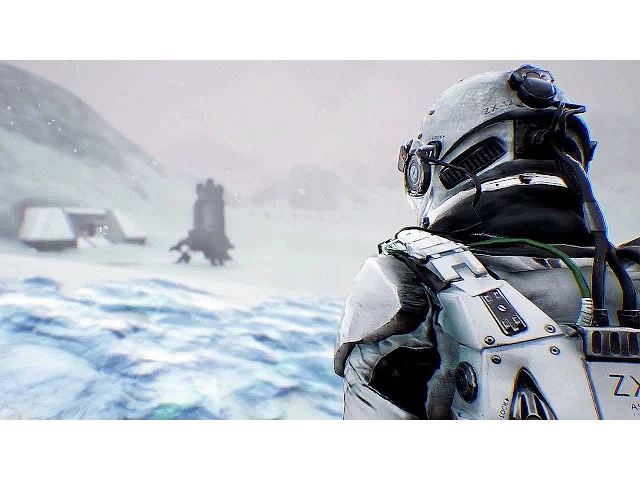
The station's puzzles are said to require a specifically human kind of reasoning. In The Turing Test, engineer Ava explores a facility on a moon of Jupiter, transferring energy between devices to overcome spatial obstacles. Gradually introduced rules make more complicated combinations possible. Alongside that progression is a confrontation with the onboard AI, whose intentions become less clear. The technical tasks are therefore connected to the central premise: the experiment depends on a distinction between human and machine thinking that the story itself begins to question.
Somerville
An ordinary person searches for his family during an invasion by alien machines. In Somerville, the story uses very little dialogue, conveying the catastrophe through environments, sound and visual scenes. An unusual ability allows the protagonist to affect alien technology and overcome obstacles. The short adventure keeps the search for loved ones at its center, showing large events from a limited human perspective. The scale of the science-fiction threat is made tangible through its consequences for one family rather than through an extensive explanation of the invasion.
Grow Home
Explorer robot B.U.D. climbs a giant alien plant towards the sky. In Grow Home, each hand is controlled separately, requiring a choice of grip and a plan for the next movement. The physics make climbing slightly awkward, turning the act of getting higher into the main activity. There are no enemies or constant time pressure, leaving room to explore, use leaves to travel through the air and examine the view from above. The small scope and freedom of movement give the journey a calm character, with the robot's physical behavior providing most of its personality.
Robot strategy and tactics
Commanding a squad or army requires a different view of its machines. Unit composition, position and the order of actions matter across these turn-based tactics games, auto-battlers and real-time strategies. Robots remain the main participants, but decisions are made at the level of the group rather than an individual cockpit.
BattleTech
Disabling one section of a mech can change the course of a battle. In BattleTech, based on the tabletop universe, players command a mercenary lance while accounting for weapon range, heat and terrain. Turn-based combat leaves time to choose a target and assess what the attack will achieve. Between missions, the company needs repairs, new pilots and financial attention as a political campaign unfolds around it. The condition of each BattleMech matters beyond a single fight. A successful engagement needs to leave the company capable of taking on the next assignment, giving preservation a place alongside firepower.
Into the Breach
Enemy attacks are visible in advance, but preventing all of them can require a careful sequence of moves. In Into the Breach from the creators of FTL, three mechs defend cities against giant insects on a small grid. Each turn involves balancing the most dangerous threats with the survival of the squad and the buildings around it. The limited scale makes consequences easy to read. Variety comes from the interaction of the machines' abilities and changing situations, keeping the short runs from settling into one routine. Its tactical battles are structured much like puzzles.
Mechabellum
Army composition and placement are decided before the machines begin fighting automatically. In Mechabellum, players select units, buy upgrades and respond to the force assembled by an opponent. The absence of direct control puts attention on preparation: understanding why the previous round ended as it did is essential to changing the next one. Simple starting rules gradually reveal relationships between units and improvements. Large battles make those decisions visible, giving auto-battler players a clear way to test their predictions. The result depends on how well each army has been prepared for the one facing it.
Warhammer 40,000: Mechanicus
The Adeptus Mechanicus explores Necron tombs, bringing heavily augmented warriors into conflict with ancient robots. In Warhammer 40,000: Mechanicus, turn-based combat is linked to the development of the expedition's squad through mechanical implants. An unusual action-point system calls for careful sequencing, while campaign decisions affect progress through the tombs. Worship of the machine god defines the faction and the atmosphere of its technological cult. The confrontation is especially relevant here: people steadily replacing flesh with machinery encounter a civilization of mechanical beings, giving the setting's imagery a clear role in the premise.
Phantom Brigade
Actions are planned along a timeline before playing out simultaneously in real time. In Phantom Brigade, a partisan mech unit fights a superior invading army, using predicted enemy trajectories to coordinate movement and attacks. Between encounters, the campaign involves liberating regions, repairing machines and improving them with recovered equipment. The main distinction is the opportunity to inspect what is about to happen and act on it. A few seconds of combat then reveal whether the plan accounted for the movement of both sides. Preparation and execution are separated, making the result particularly easy to examine.
Front Mission 1st: Remake
Building Wanzers and developing their pilots determine what a squad can do in the campaign. Front Mission 1st: Remake updates the Japanese tactical game about a conflict between two powers. Turn-based battles require decisions about which section of an enemy mech to disable and which weapons are suited to that task. Preparing the player's own machines is therefore linked to understanding the opposition. The remake retains the original approach while refreshing the visuals. It offers a way to explore a series in which equipment choices and a military story occupy equally important places.
SteamWorld Heist 2
Manual aiming allows a shot to ricochet behind an enemy's cover. In SteamWorld Heist 2, a crew of robot pirates travels by submarine and takes part in tactical firefights where the geometry of each bullet matters. Exploration, crew development and ship upgrades provide activities between raids. Humor and the steambots' personalities keep the tone light without removing the need to plan attacks. Direct control over aim makes the result of a decision visible: choosing a useful position is only part of getting the shot to land where intended.
Supreme Commander: Forged Alliance

Mechanical armies can grow to hundreds of units across land and air. In Supreme Commander: Forged Alliance, an Armored Command Unit sits at the center of each faction, while expanding production increases the scale of the conflict. Strategic zoom allows the view to move from one unit to the whole battlefield, making it possible to manage decisions at several levels. A local engagement still needs to be understood as part of the wider war. The game also features among the best strategy games. Its appeal within this list is the opportunity to command large machine armies and coordinate their operations in real time.
Iron Harvest
Diesel-powered walkers fight alongside infantry in an alternate 1920s Europe. In Iron Harvest, the story campaign follows a conflict between factions, with battles shaped by cover and the capabilities of different units. The visual setting draws on Jakub Różalski's art: riveted machines appear to belong to an industrial world already marked by war. Destructible cover can change the usefulness of a position during an encounter. The combination of heavy mechs and infantry tactics gives the RTS a specific identity, with the technology integrated into the setting as well as the combat.
Robot games FAQ
What are the best robot games on PC?
Armored Core 6: Fires of Rubicon focuses on mech combat, while Detroit: Become Human and NieR: Automata explore stories about androids. Portal 2 and The Talos Principle are options for puzzle players; BattleTech and Into the Breach emphasize tactics. The most useful starting point depends on whether piloting, strategy or narrative is the priority.
Are there good games about mechs and battle robots?
Yes. MechWarrior 5: Mercenaries emphasizes heavy-machine handling, and Armored Core 6 combines customization with fast combat. Daemon X Machina and Gundam Breaker 4 take a more arcade-oriented approach. BattleTech, Into the Breach and Mechabellum place players in command of groups of machines.
What should I play about androids and cyborgs?
Detroit: Become Human, NieR: Automata and SOMA focus on stories involving artificial minds. Nine Sols, RoboCop: Rogue City and Ghostrunner 2 place more emphasis on action. The selection approaches mechanical bodies and identity from several different directions.
What are the best classic robot games?
Options include Portal, Machinarium, Binary Domain and Zone of the Enders, alongside the MechWarrior and Front Mission series. Many have received rereleases that make them accessible on modern PCs.
Are there robot games with a good story?
Detroit: Become Human, SOMA, NieR: Automata, The Talos Principle and Primordia all make artificial intelligence central to their stories. Their themes include freedom, memory, emotion and the meaning of existence.
What robot games can I play in co-op?
Portal 2 has a separate campaign for two robot characters, and Biped builds cooperative puzzles around controlling their movement. MechWarrior 5: Mercenaries supports four-player campaign play. The Ascent and Override: Mech City Brawl also offer cooperative modes.
Share the robot games you remember most in the comments, from mech simulators to stories about androids and mechanical companions. Add any favorites missing from the list.
What else to play for robot fans
Robots also have a role in games about automation, cyberpunk societies and post-apocalyptic worlds. The titles below sit outside the main categories while developing related interests: construction, artificial people and fast combat against machines.
Satisfactory
Automated factories gradually spread across an alien planet. In Satisfactory, conveyors, drones and production lines need to be coordinated so that materials reach the right places. Players interested in The Riftbreaker's construction side can focus here on the organization and expansion of the industrial system itself. Improving one process creates the capacity to build the next.
Fallout 4
The wasteland contains both familiar service robots and synths who are almost indistinguishable from humans. In Fallout 4, artificial beings are tied to the central conflict involving the Institute, with different encounters providing perspectives on that dispute. There is also an opportunity to build and customize a robot companion. Machines are therefore part of the setting, the story and the player's own group.
Roboquest
A guardian robot fights through hostile machines in a sun-scorched future. In Roboquest, first-person shooting combines a roguelite structure with rapid movement, while co-op allows the encounters to be shared with a partner. Its pace makes it a related option for players drawn to the faster action games above. The emphasis stays on moving, responding to threats and maintaining momentum through each run.
男性最佳PC和主机游戏
- TOP 31:PC 与主机平台最佳狩猎游戏
- 2026年67款最佳FPS游戏:PC、PS5、Xbox和Switch上的第一人称射击游戏
- 2026年PC和主机上最难的35款游戏
- 僵尸射击游戏:PC、PS4、PS5、Xbox 和 Switch 上最好的游戏
- 史上76款最佳恐怖游戏(2026)
- 2026 年 20 款最佳大逃杀游戏(PC、主机与移动端)
- 史上最佳RTS游戏:从《Dune 2》到《Tempest Rising》的29款佳作
- 最佳赛车游戏
- 在PS4和PS5上最佳生存游戏:从《最后的生还者》到《亚特兰蒂斯》的40多个选择
- 最佳合作恐怖游戏——适合和朋友一起玩的恐怖佳作
- PC平台最佳生存游戏:65款以上,从《Valheim》到《Subnautica》
- PC 与主机平台 19 款最佳侦探游戏:谋杀谜案、推理谜题与侦探模拟游戏
- 最佳警察和警员游戏:从巡逻到特种部队
- 2026年Steam Deck、华硕ROG Ally、联想Legion Go的最佳游戏
- 史上最佳隐蔽游戏:PC和主机上的36款顶级游戏
- PC、PS5、Xbox 和 Switch 上的 35 款最佳格斗游戏
- 类似《Mafia》的游戏:20 款拥有相同基因的犯罪动作游戏
- 30款最佳武士游戏:开放世界、灵魂类、无双和策略游戏
- 25款最佳骑士游戏在PC和主机上:剑术战斗、角色扮演游戏和策略
- 2026 年 44 款最佳二战游戏:PC 射击、策略与模拟游戏
- PC 和主机平台 40 款最佳砍杀游戏
- 66 Best Robot Games: Mech, Android and Sci-Fi Titles for PC and Consoles